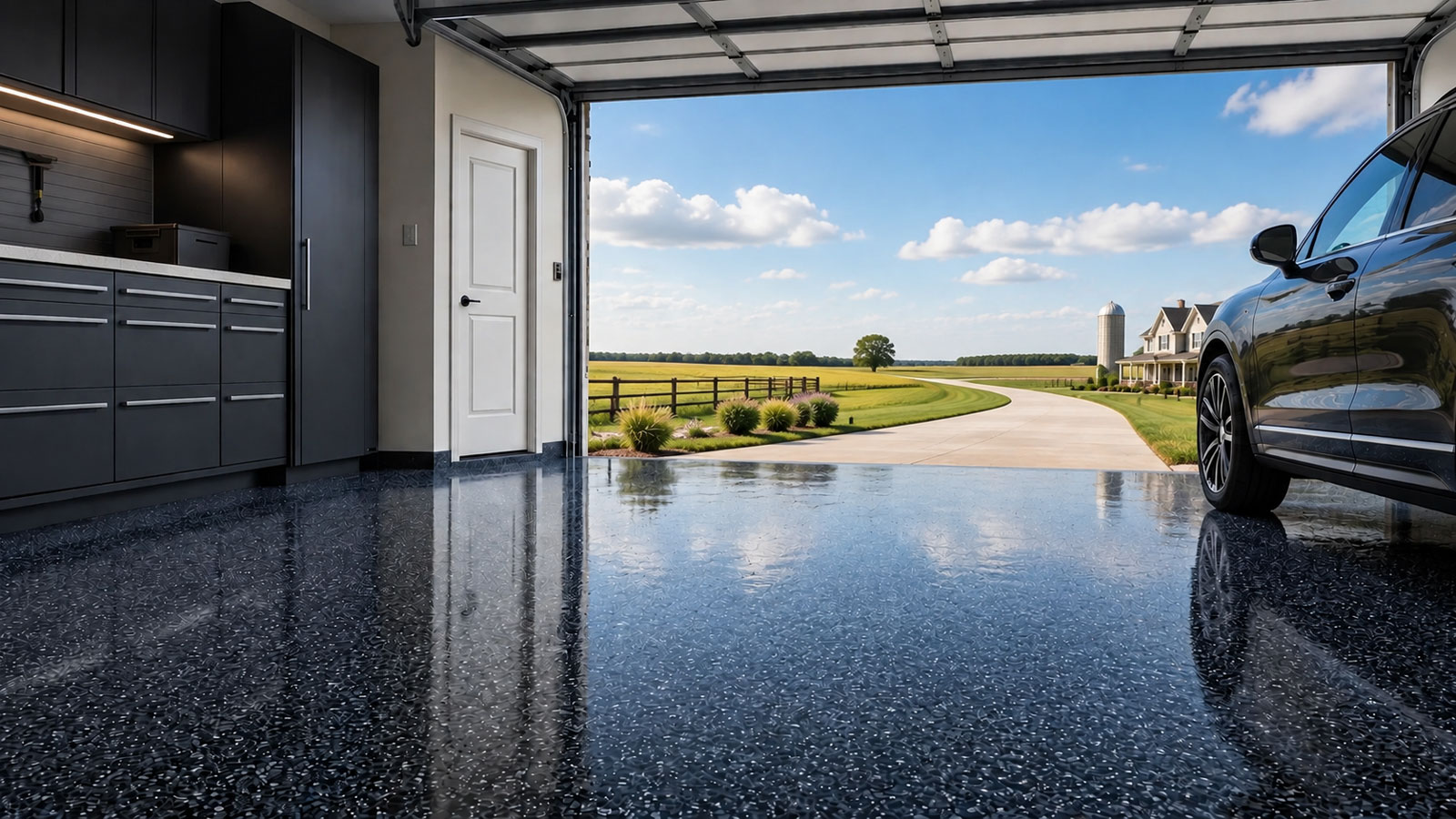
Garage Floor Coating in Gardner, KS
Floor Coating Services in Gardner, KS
Gardner has one of the clearest historic identities in Johnson County: the Santa Fe, Oregon, and California trails split just west of town at Gardner Junction. The community was founded in 1857, but most of today's residential growth is much newer. Detached shops may have years of oil staining and repairs, while newer attached garages can carry curing compounds or dense builder finishes despite little visible damage.
The population rose from 19,123 in 2010 to 23,287 in 2020 and is estimated above 26,000 in 2025. That continued growth means many Gardner garages have relatively young concrete, while the older core and rural-edge properties can still contain additions, detached shops, and long repair histories. New subdivision lots can still direct runoff toward a door through driveway slope or downspout discharge. Those paths should be checked before coating.
Gardner also regulates development around stream corridors and floodplains, including Kill Creek. For a garage project, the practical checks are slab treatment, crack or builder repair, driveway drainage, winter salt exposure, and whether a detached or large-lot garage changes access.
Local Market Insight
Gardner combines a 1857 trail-junction town with substantial modern suburban growth. Many projects therefore center on younger concrete and subdivision drainage, while older-core and large-lot garages raise different access and repair questions.
What Affects the Cost of Garage Floor Coating in Gardner?
Gardner ranges from older town garages and rural-edge shops to modern subdivisions. Old paint, oil staining and multi-pour repairs can contrast with young concrete sealers and joints. Detached access, extra bays and actual Kill Creek-area drainage conditions may also alter labor before finish selection.
Newer subdivision concrete
Recent growth means many slabs are relatively young but may still have sealers, curing compounds, or construction residue. New construction can still include curing products, sealers and builder patches that require removal or treatment.
Older core and detached-building history
Established properties can have paint, mixed pours, patches, or shop floors added later. An old garage or rural shop may contain oil contamination and mixed pours, increasing repair or cleaning labor.
Kill Creek and stormwater drainage
Development rules protect stream corridors because runoff matters. At a garage, inspect driveway grade and actual threshold water. Inspect the actual driveway and downspout path; a Kill Creek location alone does not identify slab dampness.
Winter salt and snowmelt
Vehicle-borne salt, grit, and moisture make a durable, cleanable finish valuable when properly bonded. Remove winter residue and evaluate prior damage rather than treating a coating as a substitute for maintenance.
Large lots and access
Detached garages, longer drives, or equipment-heavy shops can add staging and material-handling work. Longer approach drives and detached structures can affect equipment staging and the time needed for preparation.
Finish and return-to-service
Decorative flake, traction, topcoat, and how quickly vehicles or equipment must return affect system choice. A working shop and a family garage can need different traction, chemical resistance and return-to-use schedules.
Call for a clear, project-specific estimate — or request one online.
Local Garage-Floor Conditions in Gardner
On a newer Gardner slab, determine whether any sealer or curing product was used and look for builder patching, paint overspray, or adhesive.
On an older or detached floor, inspect for oil staining, old paint, multiple concrete placements, and prior repair compounds.
Trace water across the property after rain. Kill Creek and other stream corridors are managed because development changes runoff, and the driveway/threshold is where that issue becomes relevant to the garage.
Gardner's trail-junction history and modern housing growth are separated by more than a century
Gardner was founded in 1857 near the point where the Santa Fe Trail separated from the Oregon and California routes. That historic identity remains visible even though most of the city's current housing arrived much later.
Recent growth means a large share of garage projects begin with modern attached slabs rather than historic concrete. Older properties can still have detached buildings, additions, and several generations of surface treatment.
The age of the city is therefore less useful than the age and condition of the actual garage slab.
Gardner’s recent growth is especially useful for predicting what *kind* of preparation is likely. The population rose from 19,123 in 2010 to 23,287 in 2020 and continued above 26,000 by 2025, so many current projects involve relatively young attached garages. Those floors may need little structural repair but still require builder sealers, curing compounds, smooth finishes, and construction residue to be mechanically removed before coating.
Kill Creek and modern growth make lot drainage worth checking
Gardner's stormwater rules protect stream corridors and require development to manage runoff, with Kill Creek serving as one of the important local drainage systems.
For an individual garage, look at driveway pitch, downspout discharge, low spots, and whether water ever reaches the door. A new subdivision can still have a property-specific grading problem.
A coating can improve cleanup and durability, but it should not be used to mask recurring exterior water.
Rapid subdivision growth adds roofs, streets, sidewalks, and driveways that change how rainfall moves across former open ground. Around Gardner, stream corridors such as Kill Creek provide the larger drainage framework, but the garage-scale question is still the individual lot: where do downspouts discharge, does the driveway pitch toward the door, and does the apron hold water after storms? Correcting an exterior water path is a separate job from finishing the slab. Asking about actual threshold runoff avoids assuming all new subdivisions share identical drainage or concrete preparation needs.
Before coating a Gardner garage
- Is the slab newer subdivision concrete, an older floor, or a detached shop?
- Are sealer, curing compound, paint, or old coating present?
- Are cracks, control joints, or builder repairs visible?
- Does the property drain toward Kill Creek or another low area?
- Does the driveway send water toward the garage?
- How much winter salt and snowmelt reaches the floor?
- How much equipment or storage must be moved?
Gardner Garage Floor Coating FAQs
Does Gardner's rapid growth mean most slabs are easy to coat?
Not automatically. Newer concrete may need less repair, but sealers, curing compounds, and smooth finishes still require proper mechanical preparation. Young Gardner garages can still have builder sealers and curing compounds to remove.
Do stream-corridor rules mean my garage has a moisture problem?
No. They show that runoff is actively managed. The coating decision should follow actual water and slab evidence at the property. A floodplain or stream-corridor designation alone does not establish moisture under a floor.
Can a detached Gardner shop use a different finish from the attached garage?
Yes. Workshop traffic, equipment, chemicals, traction, and cure timing may justify a different system or texture.
What is the most important preparation question?
Ask how the installer will reach clean, sound concrete and how cracks, repairs, sealers, or old coatings will be handled before the finish is applied.
What drainage checks matter for newer Gardner subdivision garages?
Even on a new street, downspouts and driveway grades can direct runoff toward the garage door. Inspect actual water accumulation at the apron, slow-drying slab areas and signs of previous moisture before choosing the coating system.
Gardner Neighborhoods & Local Context
Phone Quote Line
Speak with a floor coating specialist about your project and get a realistic estimate range.
(913) 808-3039Typical Project Cost
$3,000–$5,500
Typical range for a two-car garage. Final pricing depends on floor size, concrete condition, prep work, coating type, and finish options.
Helpful Guides
Other Service Areas