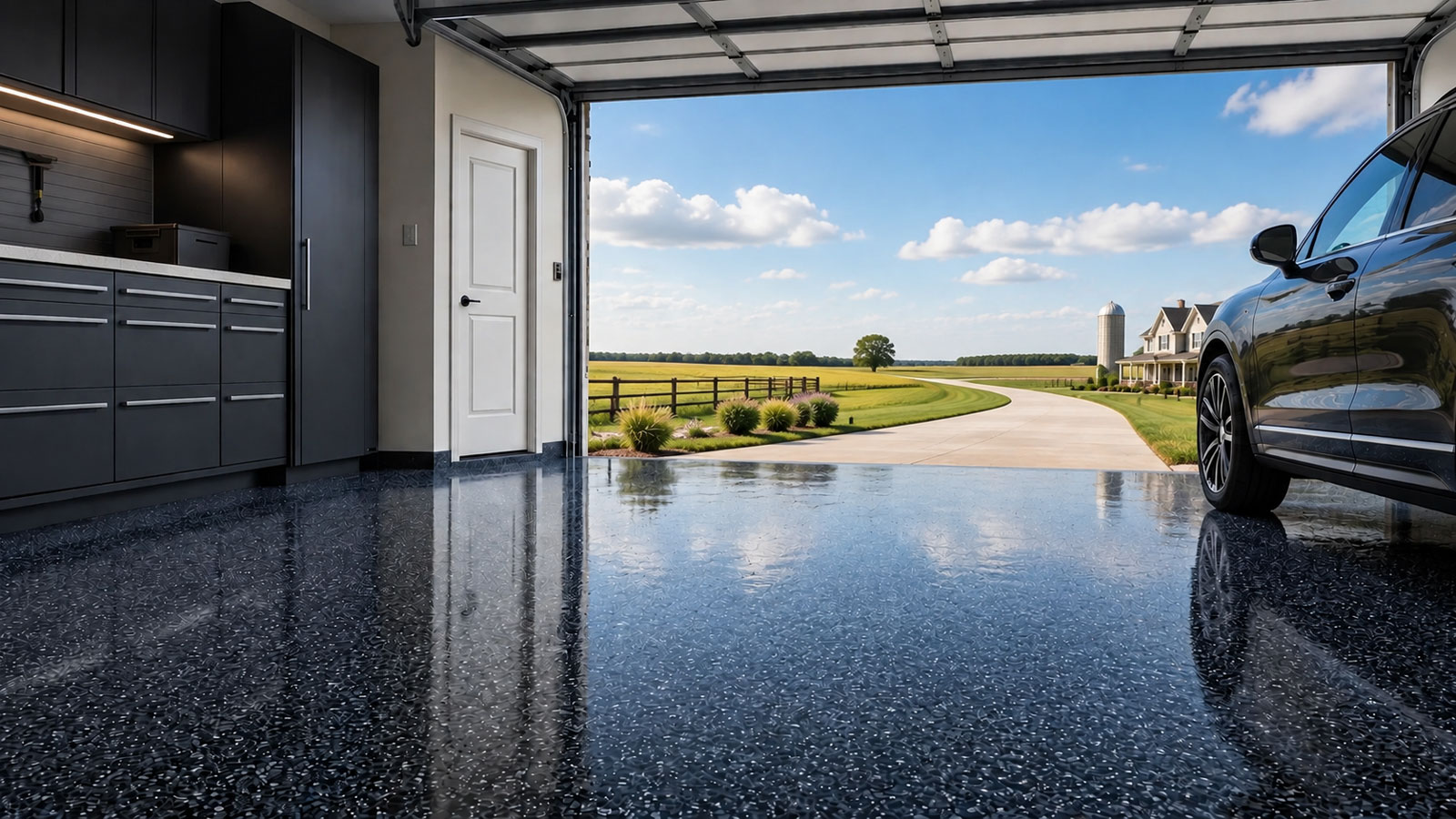
Garage Floor Coating in Kansas City, KS
Floor Coating Services in Kansas City, KS
Kansas City, Kansas has an unusually clear split between river-bottom development and older residential neighborhoods on higher ground. Wyandotte, Armourdale, Riverview, and Kansas City grew around railroads, stockyards, packing plants, and industry in the late 1800s, while many homes were built away from the floodplain on the bluffs and rolling ground above the Kansas River. House age does not establish slab age; later garages and repours may contain different patches, surface treatments or previous coatings, each requiring its own preparation.
That river history still matters at garage scale. Armourdale was repeatedly flooded from the late 1800s through the mid-1900s, and the 1951 flood left parts of the district under roughly 12 to 30 feet of water. Modern flood protection changed the risk, but low-lying properties and older concrete near the river still deserve a different inspection from a garage in Rosedale, Strawberry Hill, Piper, or another higher neighborhood. Floodplain location is not a moisture diagnosis. Present-day threshold water, repair history, driveway grade and signs of coating failure are what the homeowner should investigate.
For coating work, the useful questions are property-specific: how old is the slab, has the garage been added or repoured, what coatings or repairs are already present, and has water ever reached the threshold or stayed on the slab after major storms?
Local Market Insight
KCK combines 19th-century industrial and residential fabric, river-bottom flood history, and newer western growth. The difference between high ground and Kansas River lowlands is a real project variable, not a generic metro detail.
What Affects the Cost of Garage Floor Coating in Kansas City?
Kansas City, Kansas combines older river-bottom properties, hillside neighborhoods and newer western construction. Paint, patched pours, old surface treatments, garage access and actual runoff history change grinding and repair work. Two similar-size floors can therefore require very different preparation before the same finish is installed.
Older urban slab history
Established KCK neighborhoods can contain garages added long after the house, leaving mixed concrete, old paint, repairs, or previous coatings that require removal. Ask whether the garage was repoured or expanded after the residence and how each concrete area will be ground.
Kansas River and lowland drainage
Properties in or near low river-bottom areas should be checked for actual flood or runoff history, dampness, mineral deposits, and old coating failure. Check actual threshold water and mineral deposits before assuming the floodplain location requires a different coating.
High-ground driveway slope
Homes on bluffs and rolling terrain can have steeper approaches that direct runoff toward or away from the garage door. An uphill or downhill approach can change how rain reaches the slab even when the garage itself stays dry.
Industrial-era contamination and repairs
Older utility garages may have oil staining, patch compounds, adhesive, or other surface contamination that adds grinding and cleaning work. Oil staining or unstable old repairs may need deeper removal and spot treatment before a system can bond.
Newer western-area slabs
Later suburban floors may need fewer structural repairs but can still have curing compounds, sealers, or smooth finishes that interfere with adhesion. A recent floor can still contain curing compounds and sealers that must be mechanically removed rather than coated over.
Finish and use
Parking, workshop use, storage, traction, decorative flake, and vehicle return timing all influence the final system. Discuss whether a workbench, storage walls, drainage or rapid vehicle return creates additional edge or scheduling work.
Call for a clear, project-specific estimate — or request one online.
Local Garage-Floor Conditions in Kansas City
On an older KCK property, look for construction joints, concrete color changes, former wall lines, patching, and old coatings. Those details often reveal that the garage slab has a different history from the residence.
If the property sits near the Kansas River lowlands or a known drainage corridor, describe what actually happens during heavy rain. Water marks at the door, slow-drying areas, or efflorescence are more useful than assuming river proximity automatically means slab moisture.
On higher or newer properties, inspect the driveway grade and the surface treatment on the concrete. A clean-looking floor can still need aggressive mechanical preparation.
Kansas City, Kansas grew on both floodplain and high ground
The city's early industrial districts clustered around rail lines, stockyards, and the Kansas River, while many residential areas developed on higher ground above the floodplain. That geography helped shape neighborhoods such as Armourdale, Rosedale, and the urban core.
For a garage floor, the practical lesson is that two KCK addresses can have very different water histories even when they are only a few miles apart. A low-lying property may raise drainage questions; a hillside property may raise driveway-slope questions instead.
The coating system should follow the individual slab and site rather than a citywide assumption.
That high-ground/low-ground split is useful during an estimate because it changes what should be investigated first. In an older Armourdale or river-bottom garage, ask about flood or repour history, old coatings, patches, and whether the slab edge has ever taken water. In Piper or another newer western area, the more likely questions may be builder-applied sealers, control joints, and subdivision grading. The city name is the same, but the preparation problem can be completely different.
The 1951 flood is a reminder to separate drainage from coating
The 1951 Kansas River flood devastated Armourdale and remains part of the area's flood-management history. Modern levees and river improvements changed conditions substantially, but they did not make every parcel identical.
If a garage has a documented history of water entry, active drainage should be corrected before the coating becomes the finished surface. If the garage stays dry, the project can focus on preparation, repair, and finish rather than historical flood risk.
A coating can improve cleanup after wet vehicles and minor water exposure, but it cannot substitute for exterior drainage work.
The scale of the 1951 Armourdale flood is why water history should be treated as its own project question: parts of the district were under roughly 12 to 30 feet of water, and later flood-control work substantially changed the river relationship. A current garage should therefore be judged by its own evidence—threshold marks, recurring dampness, mineral deposits, old coating failure, or known repours—not by assuming either that historic flooding still dictates the slab or that modern protection makes drainage irrelevant.
Before coating a Kansas City, Kansas garage
- Is the property on higher ground, a slope, or near a river-bottom drainage area?
- Does the slab show additions, repours, old paint, or previous coatings?
- Are cracks, patches, oil stains, or chipped edges present?
- Has water ever crossed the garage threshold?
- Does the driveway slope toward or away from the door?
- Is the floor newer concrete with an unknown sealer or curing treatment?
- How is the garage used day to day?
Kansas City Garage Floor Coating FAQs
Does living near the Kansas River mean a garage cannot be coated?
No. The important issue is the actual water and slab history. A dry, sound garage can be a good candidate; recurring water entry should be corrected first. Older garages and later additions can have different pours, so ask about actual surface history.
Do older KCK homes always have older garage slabs?
No. Garages are often added, expanded, or repoured later. The installer should evaluate the concrete itself rather than assume it matches the home's age. Repairs, old coatings and mixed concrete may matter more than the house's original date.
Why can a hillside KCK garage need different planning?
Driveway slope can change runoff at the threshold and equipment access even when the slab itself is straightforward.
What should I compare between quotes?
Compare grinding, repair scope, coating chemistry, layer count, traction, topcoat, cure time, and exactly what edge work is included.
How can an older Armourdale garage differ from a newer western Kansas City garage?
An established Armourdale floor may have paint, patches, older repairs or multiple concrete pours, while a newer western slab may mainly need sealers or curing compounds removed. The installer should evaluate the surface and actual drainage at each property rather than generalize.
Kansas City Neighborhoods & Local Context
Phone Quote Line
Speak with a floor coating specialist about your project and get a realistic estimate range.
(913) 808-3039Typical Project Cost
$3,000–$5,500
Typical range for a two-car garage. Final pricing depends on floor size, concrete condition, prep work, coating type, and finish options.
Helpful Guides
Other Service Areas